


Watch Description
What Makes The Lancaster 136 Unique:
The Lancaster 136 represents the refined confidence of postwar American watchmaking. Built around a 17-jewel Hamilton movement manufactured in 1946, this watch comes from a period when Hamilton had firmly established itself as one of the country’s premier manufacturers of precision timepieces. By the mid-1940s, the company’s movements reflected decades of incremental refinement, combining dependable performance with understated elegance that continues to resonate with collectors today.
The dial immediately conveys that philosophy. Rather than relying on dramatic patina or ornate decoration, it displays a soft cream finish that has naturally mellowed over nearly eighty years. Gentle aging spreads evenly across the surface, lending warmth and authenticity without compromising legibility. Collectors often appreciate dials like this because they exhibit honest character while remaining remarkably balanced and uncluttered.
One of the most distinctive elements is the typography. The bold applied Arabic numerals feature a classic Art Deco influence, with crisp edges and subtle dimensionality that catch the light differently than printed numerals. Paired with slender blued-steel hands, the dial achieves an elegant contrast that feels equally appropriate today as it did when the movement first left Hamilton’s factory.
The subsidiary seconds register at six o’clock anchors the composition while preserving the proportions originally intended for this 10-size movement. A finely printed double-track chapter ring surrounds the dial, providing additional visual structure without distracting from its restrained design.
Turning the watch over reveals why Hamilton’s 917 movements continue to enjoy such a strong reputation among collectors. The movement features broad Geneva striping across its bridges, polished winding wheels, gold jewel settings surrounding ruby jewels, and Hamilton’s signature spiral-pattern ratchet wheel. Each finish serves both an aesthetic and functional purpose, reflecting the company’s commitment to producing movements that were as attractive as they were dependable.
This particular movement is adjusted to three positions, a designation that speaks to Hamilton’s emphasis on precision. Position adjustment required additional time and skill during regulation, ensuring more consistent timekeeping as the watch changed orientation throughout daily wear. It remains one of the characteristics collectors look for when evaluating vintage Hamilton movements.
The modern Vortic case complements the movement with equal restraint. The 43mm tumbled stainless steel case introduces a soft matte texture that pairs naturally with the aged dial while avoiding unnecessary visual flash. The matching tumbled bezel and crown reinforce the cohesive design, and the cognac leather strap adds warmth that echoes the dial’s naturally developed patina.
By 1946, American manufacturers were entering a new chapter following World War II, bringing decades of mechanical expertise into a rapidly changing marketplace. The Lancaster 136 captures that moment beautifully, combining a mature Hamilton movement with timeless styling that feels neither overly ornate nor overly modern.
The result is a watch defined by quiet confidence. Between the naturally aged cream dial, applied Art Deco numerals, blued-steel hands, finely finished 917 movement, and understated tumbled steel case, the Lancaster 136 offers collectors a thoughtful example of American watchmaking at its most refined.
Movement Manufacturer Information
The movement inside of this watch was made by Hamilton Watch Company. We call this model "The Lancaster" because the company was located in Lancaster, Pennsylvania.
Hamilton is named after famous Pennsylvanian Alexander Hamilton and is the result of multiple re-organizations of attempted watch companies in Lancaster, Pennsylvania. Founded in 1892, Hamilton had a reputation for superior quality and maintained half of the railroad watch market share during some of the most prolific years of American railroad history. During World War II, Hamilton was integral to the production of accurate timepieces for the Military. Deemed "the watch that won the war," the company established an employee-run newsletter so that employees turned soldiers could keep up with life at the factory. While the original factory still stands as luxury apartments, the company stopped producing watches in the US in 1969. Hamilton now produces watches in Switzerland and is owned by the Swatch Group.
Legal Disclaimer: All product and company names, logos, brands, and other trademarks featured or referred to within Vortic's products and services are the property of their respective intellectual property rights holders, if any. Those intellectual property rights holders, other than Vortic Holding Company, LLC, are not affiliated with Vortic Holding Company, LLC, our products, or our website. They do not sponsor or endorse our materials.
Watch Specifications
- Manufacturer: Vortic Watch Company
- Model Year: 2025
- Warranty: Full 1-Year Warranty
- Case Diameter: 43mm
- Case Material: Tumbled Stainless Steel
- Crown/Hardware: Stainless Steel
- Water Resistance: 1ATM
- Crystals: Sapphire
- Case Back: Stainless Steel
- Strap: Leather
Movement
- Manufacturer: Hamilton Watch Company
- Serial Number: X118001
- Manufacture Year: 1946
- Function: Manual Wind
- Jewels: 17 Jewels
- Hands: Original
- Size: 10s
- Power Reserve: ~36 Hours
What Makes The Lancaster 136 Unique:
The Lancaster 136 represents the refined confidence of postwar American watchmaking. Built around a 17-jewel Hamilton movement manufactured in 1946, this watch comes from a period when Hamilton had firmly established itself as one of the country’s premier manufacturers of precision timepieces. By the mid-1940s, the company’s movements reflected decades of incremental refinement, combining dependable performance with understated elegance that continues to resonate with collectors today.
The dial immediately conveys that philosophy. Rather than relying on dramatic patina or ornate decoration, it displays a soft cream finish that has naturally mellowed over nearly eighty years. Gentle aging spreads evenly across the surface, lending warmth and authenticity without compromising legibility. Collectors often appreciate dials like this because they exhibit honest character while remaining remarkably balanced and uncluttered.
One of the most distinctive elements is the typography. The bold applied Arabic numerals feature a classic Art Deco influence, with crisp edges and subtle dimensionality that catch the light differently than printed numerals. Paired with slender blued-steel hands, the dial achieves an elegant contrast that feels equally appropriate today as it did when the movement first left Hamilton’s factory.
The subsidiary seconds register at six o’clock anchors the composition while preserving the proportions originally intended for this 10-size movement. A finely printed double-track chapter ring surrounds the dial, providing additional visual structure without distracting from its restrained design.
Turning the watch over reveals why Hamilton’s 917 movements continue to enjoy such a strong reputation among collectors. The movement features broad Geneva striping across its bridges, polished winding wheels, gold jewel settings surrounding ruby jewels, and Hamilton’s signature spiral-pattern ratchet wheel. Each finish serves both an aesthetic and functional purpose, reflecting the company’s commitment to producing movements that were as attractive as they were dependable.
This particular movement is adjusted to three positions, a designation that speaks to Hamilton’s emphasis on precision. Position adjustment required additional time and skill during regulation, ensuring more consistent timekeeping as the watch changed orientation throughout daily wear. It remains one of the characteristics collectors look for when evaluating vintage Hamilton movements.
The modern Vortic case complements the movement with equal restraint. The 43mm tumbled stainless steel case introduces a soft matte texture that pairs naturally with the aged dial while avoiding unnecessary visual flash. The matching tumbled bezel and crown reinforce the cohesive design, and the cognac leather strap adds warmth that echoes the dial’s naturally developed patina.
By 1946, American manufacturers were entering a new chapter following World War II, bringing decades of mechanical expertise into a rapidly changing marketplace. The Lancaster 136 captures that moment beautifully, combining a mature Hamilton movement with timeless styling that feels neither overly ornate nor overly modern.
The result is a watch defined by quiet confidence. Between the naturally aged cream dial, applied Art Deco numerals, blued-steel hands, finely finished 917 movement, and understated tumbled steel case, the Lancaster 136 offers collectors a thoughtful example of American watchmaking at its most refined.
Let customers speak for us
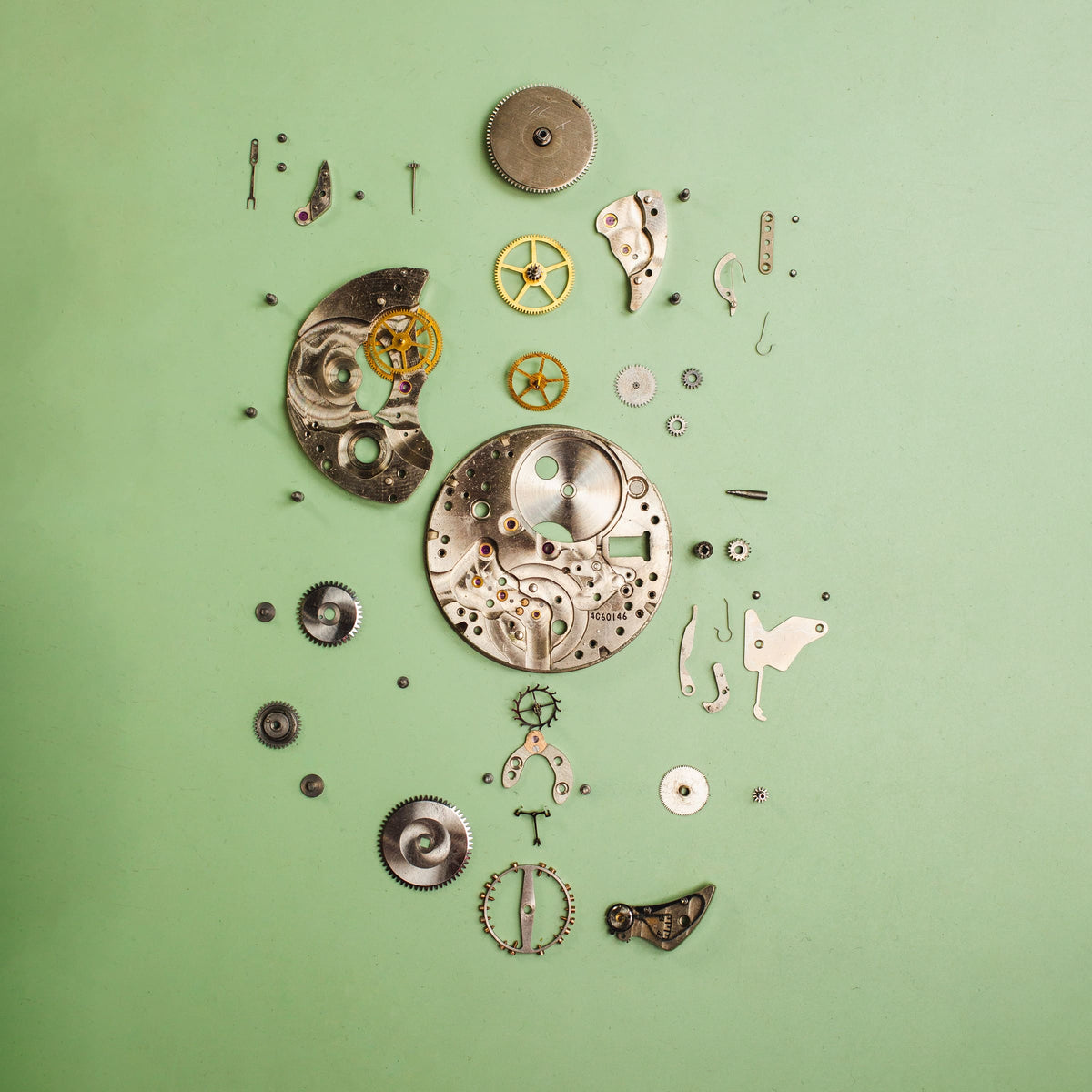
The Movement
The engine that powers this watch is an antique American pocket watch movement. All the gears and springs that make it tell time are roughly 100 years old on average. We call these watches the American Artisan Series because we're celebrating the history and legacy of the artisan watchmakers who built this engineering marvel a century ago in the United States.
The Story
Today most pocket watches are scrapped for the gold or silver of the case (the outside of the antique timepiece), leaving the inside (what we call the "movement") as trash.
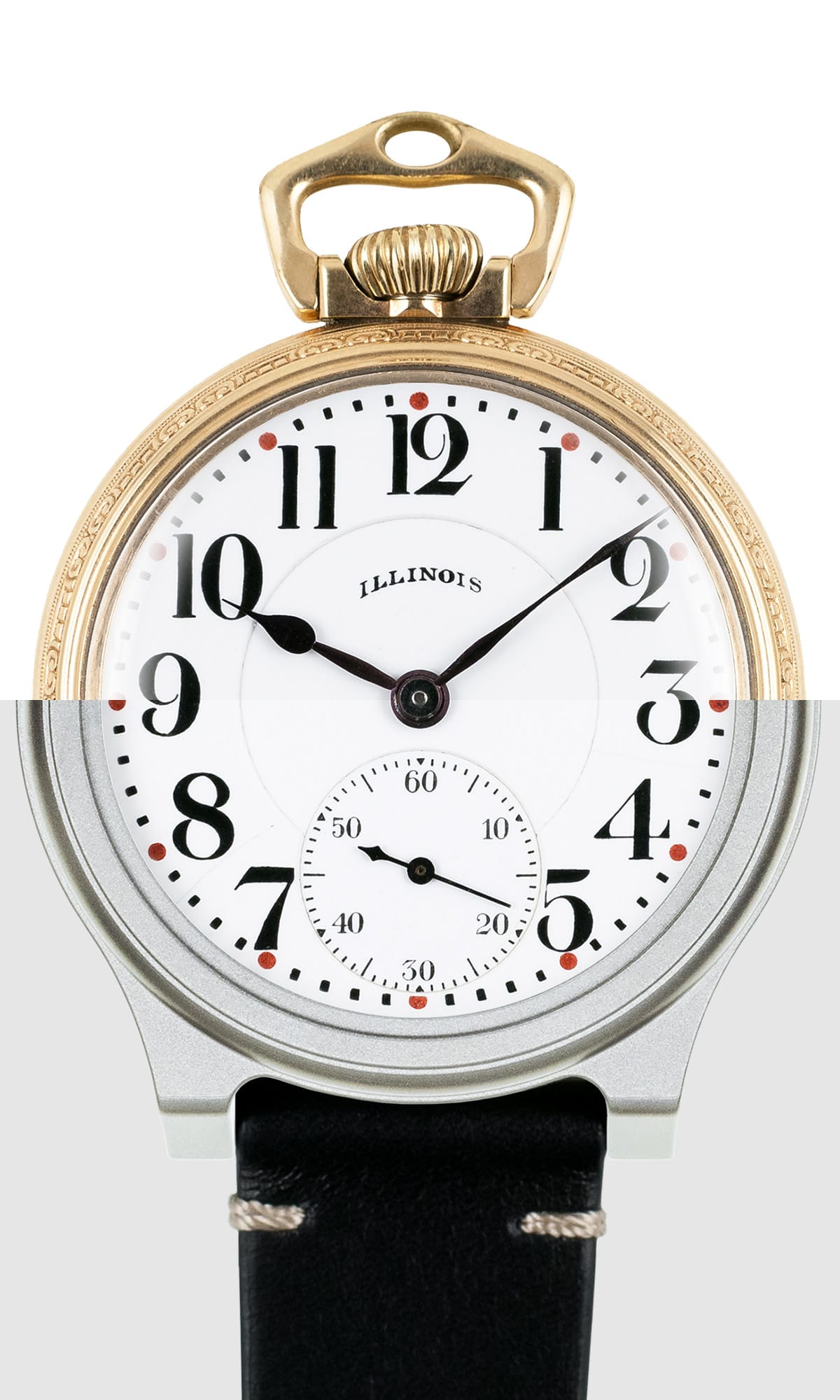
We take pride in upcycling these pieces of American history by salvaging as many as we can, then preserving them inside our wristwatches.
Our expert team of watchmakers restores the antique movement and then we manufacture a custom wristwatch case here in Fort Collins, Colorado.
The Strap
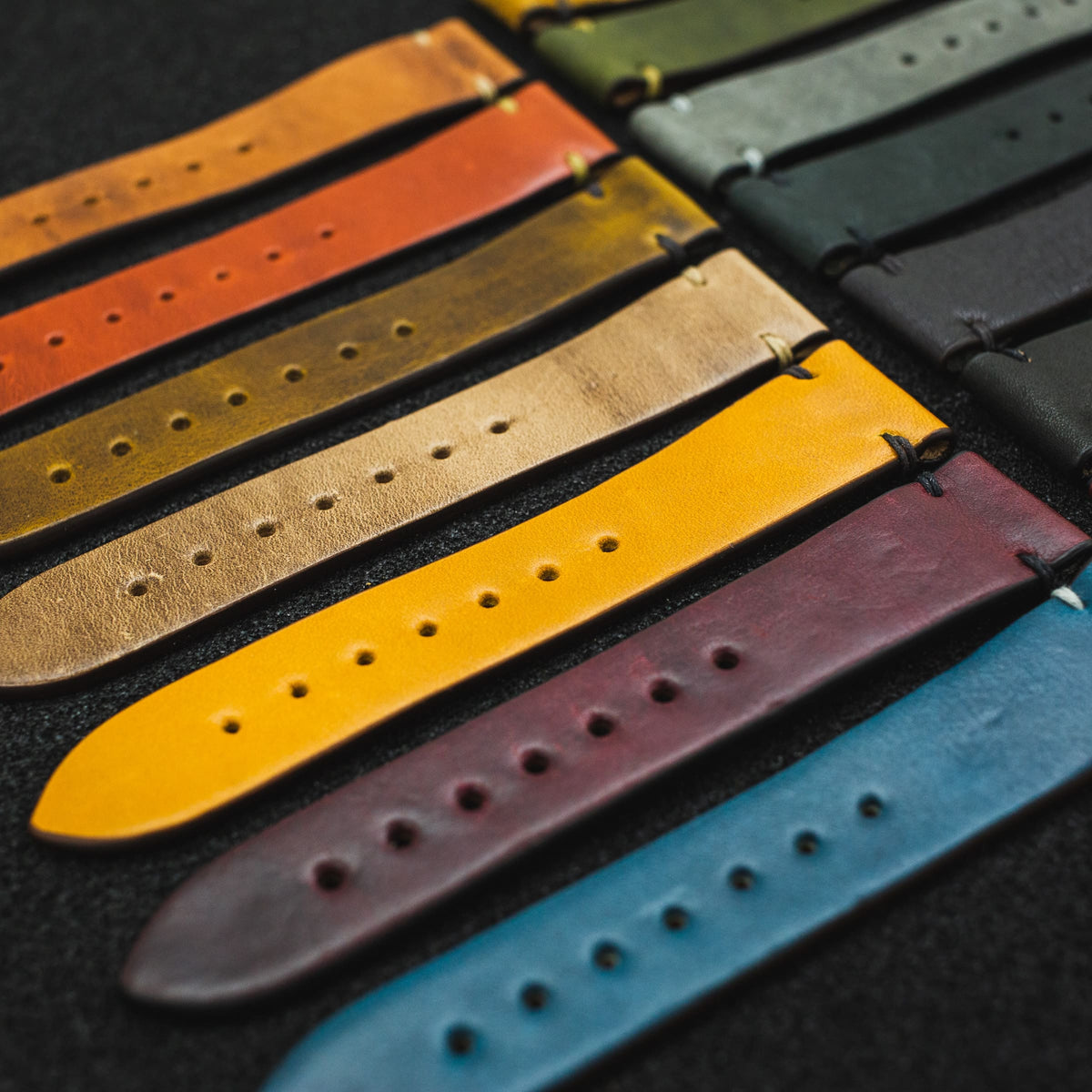
We partnered with Worn & Wound to produce a custom set of straps for our American Artisan Series watches. We now have 15 different colors to choose from including our two Horween Shell Cordovan options. These straps are made in the USA and are based on the Windup Model 2 Premium strap that Worn and Wound offers.